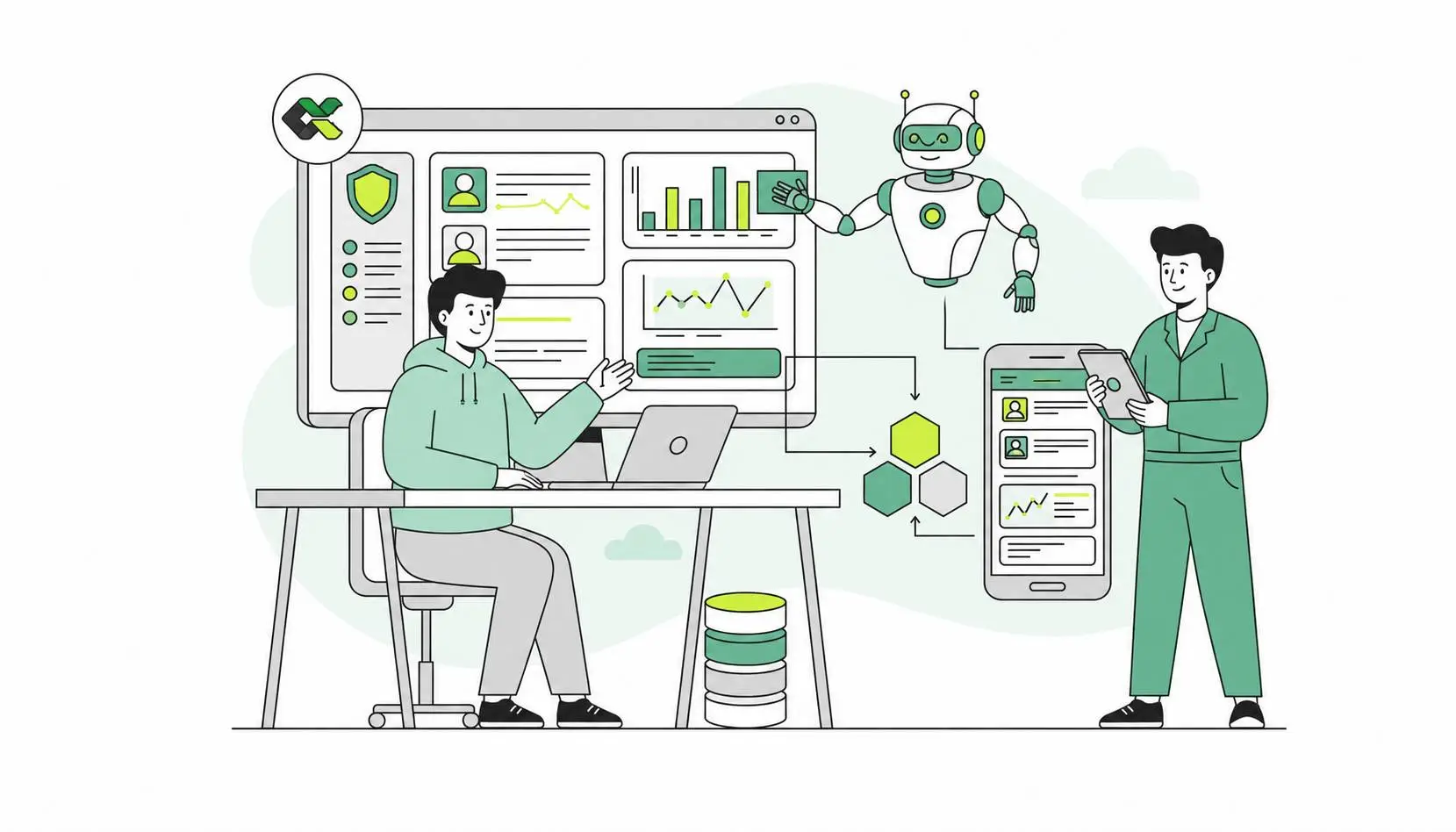

Almost every business owner who wants more customers online runs into the same fork in the road: should you invest in SEO, or in paid ads? Both promise to bring people to your website. Both cost money. And both come with confident advocates telling you the other is a waste.
The honest answer is that SEO vs paid ads isn't really a battle — they're two different tools that work in different ways and on different timelines. The smarter question is which one fits your business right now. This guide breaks down how each works, what they really cost, and how to decide where your first euro should go.
What is SEO, really?
SEO — search engine optimisation — is the work of getting your website to appear in the organic (unpaid) results on Google and other search engines. When someone searches "plumber near me" or "best accounting software," the listings below the ads are earned through SEO.
You earn that position through relevant, helpful content, a fast and well-built website, sensible technical setup, and signals of trust like links from other sites. You don't pay Google for the clicks — but you do invest time and expertise to climb the rankings.
The upside: once you rank well, traffic keeps arriving without paying per visit. It compounds, builds credibility (people trust organic results), and the value lasts for months or years.
The trade-off: it takes time. SEO is rarely an overnight win — you're often looking at a few months before you see meaningful movement.
What are paid ads?
Paid ads — often called PPC (pay-per-click) — are the sponsored listings at the top of search results, or the promotions you see across social media and other websites. With Google Ads, for example, you bid to appear for chosen keywords and pay each time someone clicks.
The upside: speed. You can switch on a campaign today and have qualified visitors on your site within hours. You control the budget, target precisely, and measure results down to the cent. It's ideal for launches, promotions, and testing what messaging actually converts.
The trade-off: the moment you stop paying, the traffic stops. There's no compounding — you're renting visibility, not owning it. And in competitive industries, the cost per click can climb quickly.
SEO vs paid ads: the key differences
It helps to see them side by side:
- Speed: Paid ads deliver traffic almost immediately; SEO builds over months.
- Cost over time: Ads cost every click, indefinitely; SEO costs more upfront in effort but becomes cheaper per visitor as it matures.
- Longevity: Stop paying for ads and traffic vanishes; SEO rankings keep working long after the work is done.
- Trust: Many users skip ads and trust organic results more.
- Control & targeting: Ads offer precise, instant control over who sees what; SEO is less direct but broader in reach.
- Best for: Ads suit urgent, short-term, or promotional goals; SEO suits sustainable, long-term growth.
Neither is "better." They simply solve different problems.
When paid ads make sense first
Paid advertising is often the right first move when you need results quickly — you've just launched, you're running a time-limited promotion, or you need cash flow now rather than in six months. It's also invaluable for learning: a short campaign quickly reveals which keywords, offers, and messages convert, and that insight then makes your SEO far sharper.
If your margins comfortably absorb the cost per click and you need momentum fast, ads are a sensible starting point.
When SEO makes sense first
SEO tends to be the wiser first investment when you're building for the long term and want to stop renting every visitor. If your budget is limited and you can't sustain ongoing ad spend, the compounding nature of SEO gives you far more for your money over time. It's also the stronger choice when trust matters in your field — organic visibility signals credibility in a way ads rarely do.
The catch is patience: you need to be able to wait for results while the groundwork takes hold.
The truth: they work best together
The most effective digital strategies rarely choose one and abandon the other. They use paid ads to capture demand today while SEO builds an asset that pays off tomorrow. Ads can carry you through the early months while your organic rankings mature; the data from your ad campaigns sharpens your SEO targeting; and once SEO is strong, you can scale ads back or aim them only at your highest-value keywords.
It's less "which one" and more "what mix, and in what order."
So which should you invest in first?
Here's a simple way to decide. If you need customers now — for cash flow, a launch, or a deadline — and you can afford the clicks, start with paid ads, then reinvest the learnings into SEO. If you're playing the long game, have a tighter budget, and can be patient, start with SEO and layer in targeted ads once the foundation is set.
For most small businesses, the realistic path is: build a fast, well-optimised website first, start SEO early because it takes time, and use focused paid ads to fill the gap while it grows.
That foundation matters more than people expect. Both SEO and paid ads send people to your website — and if that site is slow, poorly built, or unconvincing, you're paying (in clicks or in effort) to send visitors to a leaky bucket.
How ClixoWeb can help
Whichever route you take, it only works on solid foundations — and that's where ClixoWeb comes in. We build fast, search-friendly websites that give your SEO a head start and your ad campaigns somewhere worth landing; we handle the domain and hosting that keep those pages quick and reliable; our graphic design makes both your ads and landing pages convert; and our maintenance and support keep everything healthy as you grow.
Final thoughts
SEO and paid ads aren't rivals — they're partners that excel at different things. Paid ads buy you speed; SEO builds you a lasting asset. The right first step depends on your timeline, your budget, and how quickly you need results. Get the foundation right, choose your starting point with clear eyes, and you can grow your visibility without wasting a single euro.
Related posts
Why Your Blog Is Your Most Powerful SEO Asset (And How to Use It)
Many business owners see a blog as a "nice to have" — something to update occasionally when there's a spare afternoon, sitting quietly in a corner of the w
ReadWhy Website Speed Directly Affects Your Lead Generation
** Discover how website speed directly impacts your lead generation — from bounce rates to Google rankings — and what actually makes a site load faster.
ReadWhy Every Tourism Business Needs a Custom Website (Not Just a Booking Widget)
** A booking widget processes transactions; a custom tourism business website builds your brand, wins direct bookings, and cuts commission. Here's why it matters.
Read